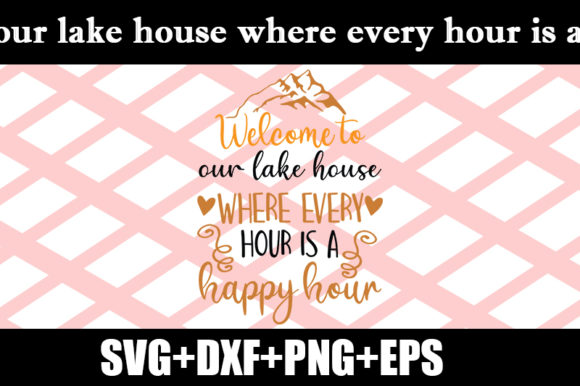
Welcome to Our Lake House Quote
As a designer who spends more time behind an embroidery machine than in front of a computer, I look for designs that do more than just sit on a screen. They need to translate into thread with clarity and character. When I first encountered the Welcome to Our Lake House Quote, it wasn't just another graphic file; it felt like a specific mood board come to life. The phrase "where every hour is a happy hour" carries a distinct energy—relaxed, welcoming, and undeniably cozy. It immediately signals a vacation vibe, a weekend retreat, or a permanent home base for those who love water and downtime.
The visual personality of this design leans heavily into the casual side of crafting. It isn't trying to be high-end corporate branding or intricate fine art. Instead, it fits perfectly into the realm of handmade product creation where warmth and approachability are key. Whether you are an Etsy seller looking to expand your catalog or a hobbyist making gifts for friends, this design offers a natural entry point for projects that celebrate leisure and lifestyle.
Real-World Application: From Screen to Stitch
Let's talk about how this actually looks when it leaves the digital space and hits the fabric. I recently simulated using this design for a custom embroidered tote bag intended as a boutique gift. The layout of the text suggests a horizontal flow that works beautifully on wide surfaces. On a canvas tote, the quote would anchor the center of the bag without feeling cramped. The phrase "every hour is a happy hour" has a rhythmic quality that translates well into stitching, provided the font style chosen matches the relaxed tone.
I also considered placing this on a sweatshirt for a small shop merchandise line. The combination of a soft cotton blend and a playful lake house theme creates a strong emotional connection with the buyer. However, placement matters immensely here. For a sweatshirt, positioning the design slightly off-center or across the chest can feel more modern than a centered box. The design feels most at home on items that are meant to be worn comfortably or used casually around the house.
Beyond apparel, I see significant potential in home decor. Imagine this stitched onto a kitchen towel hanging near a coffee maker or a pillow cover on a living room sofa. In these contexts, the machine embroidery design acts as a conversation starter. It tells a story about the homeowner's favorite getaway spot. For holiday gifts, especially during summer or winter break seasons, this design adds a personalized touch that mass-produced items simply cannot match. A baby item, like a onesie or a blanket, could also benefit from this softer, more whimsical aesthetic, though care must be taken regarding the scale of the lettering.
Navigating Technical Challenges
While the concept is sound, executing a custom apparel project requires practical judgment. Not every surface is created equal, and this design has specific constraints that a professional needs to respect. If you plan to use this on a cap or hat, the curved surface presents a challenge. Text that looks straight on a monitor can warp if not digitized correctly for a 5-inch hoop. You must ensure the curve compensation is accurate, or the words might stretch awkwardly over the brim.
Texture is another critical factor. Embroidery thrives on stability. Trying to stitch this on a thin, stretchy fabric like a lightweight t-shirt without proper stabilization will result in puckering. The density of the stitches needs to support the fabric, not fight against it. If you are working with dark fabrics, thread color contrast becomes paramount. A light-colored thread on a navy blue shirt will pop, but a dark thread on black might get lost entirely. Always test your thread colors against your final fabric choice before committing to a full production run.
Detailed corners and tiny lettering are areas where this design requires scrutiny. If the original file includes very small serifs or decorative accents, they may not survive the rigors of frequent washing or the limitations of a small hoop size. Dense stitch areas can cause the fabric to pucker, especially on textured materials like fleece or heavy denim. To avoid a messy finish, you might need to adjust the stitch density or simplify certain elements of the design to ensure the letters remain legible after stitching.
Visual Appeal and Brand Consistency
In the world of craft business and Etsy sellers, presentation is everything. A well-executed embroidery project builds trust. When a customer receives a finished product with clean lines and no loose threads, they perceive higher value. This design supports that perception by offering a clear, readable message that resonates with the target audience. It reinforces brand consistency for shops specializing in rustic, coastal, or vacation-themed goods.
The finished product should feel intentional. If the design is too large for the garment, it looks clumsy. If it is too small, it gets lost. Proper scaling ensures that the digital embroidery file serves its purpose effectively. For commercial use, this design can elevate a simple item into a premium gift. The phrase itself invites engagement, making the item more shareable on social media, which is crucial for creative entrepreneurs looking to grow their following.
Practical Notes for the Designer
Before you hit the start button on your machine, there are several steps to take to ensure success. First and foremost, test the design on scrap fabric. This is non-negotiable. Scraps allow you to check stabilizer choices, tension settings, and thread performance without risking your actual inventory. Check the hoop size compatibility to ensure the design fits within your machine's capabilities.
Review the stitch types carefully. Depending on the file format provided (SVG, DXF, EPS, PNG), you may need to convert the vector paths into appropriate embroidery stitches like satin stitch for outlines or fill stitch for block letters. Ensure that the running stitch details, if any, are spaced correctly to prevent tangling. Inspect small details closely; sometimes, what looks good on a screen becomes illegible in thread form.
Comparing light and dark fabric backgrounds in your mockups is essential for planning your color palette. Use black and white mockups to verify the contrast and readability of the text structure. Confirm whether the license allows for both personal and commercial projects if you intend to sell the finished items. If you are selling the digital files themselves, double-check the terms regarding redistribution.
Finally, consider the longevity of the piece. Products that need frequent washing require robust stitching techniques. Ensure that the design is anchored well enough to withstand repeated cycles. By taking these precautions, you transform a simple graphic into a durable, high-quality asset. The Welcome to Our Lake House Quote is more than just text; it is a promise of relaxation that, when stitched with care, becomes a cherished part of someone's daily life.